Nepal has solved school enrolment. It has not solved reading.
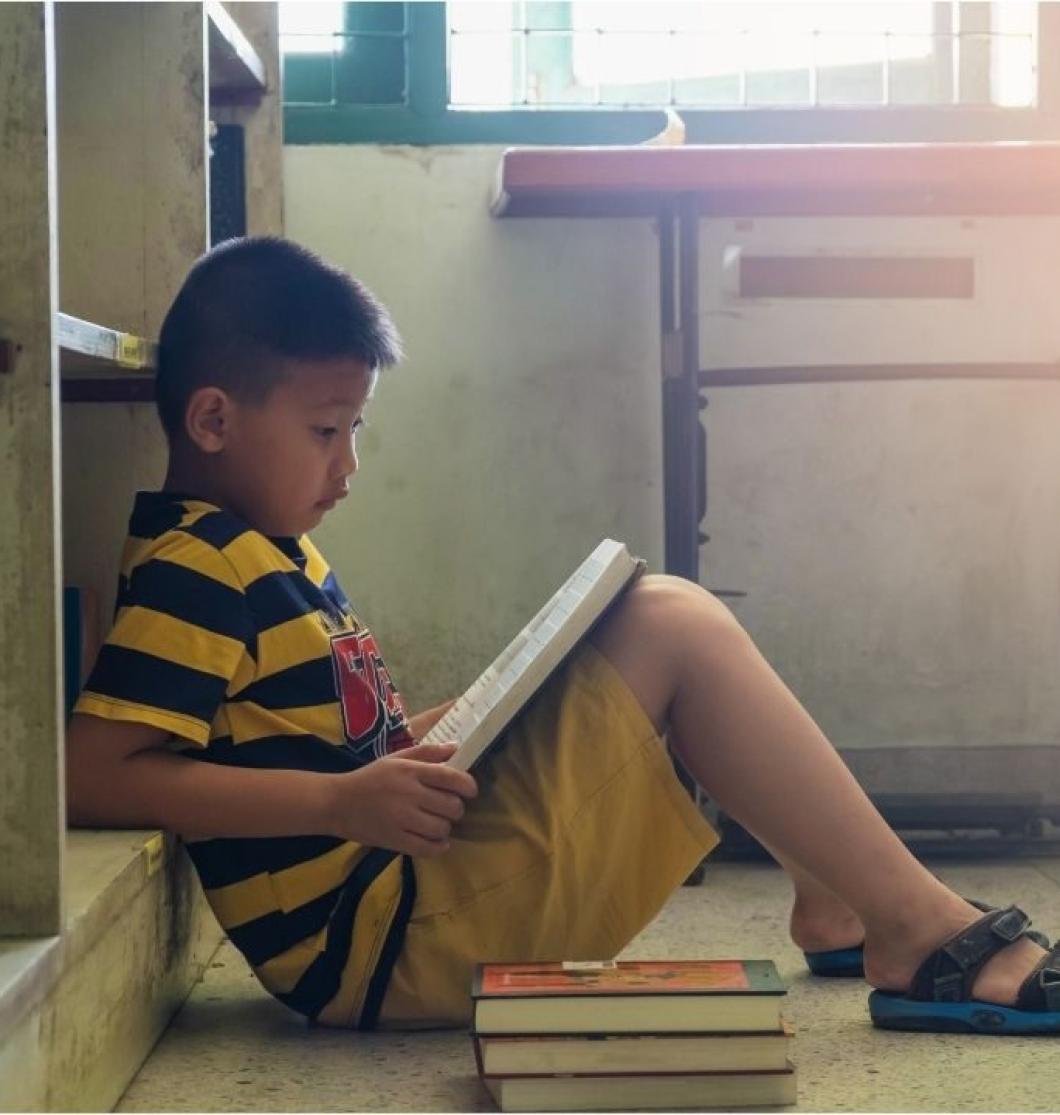
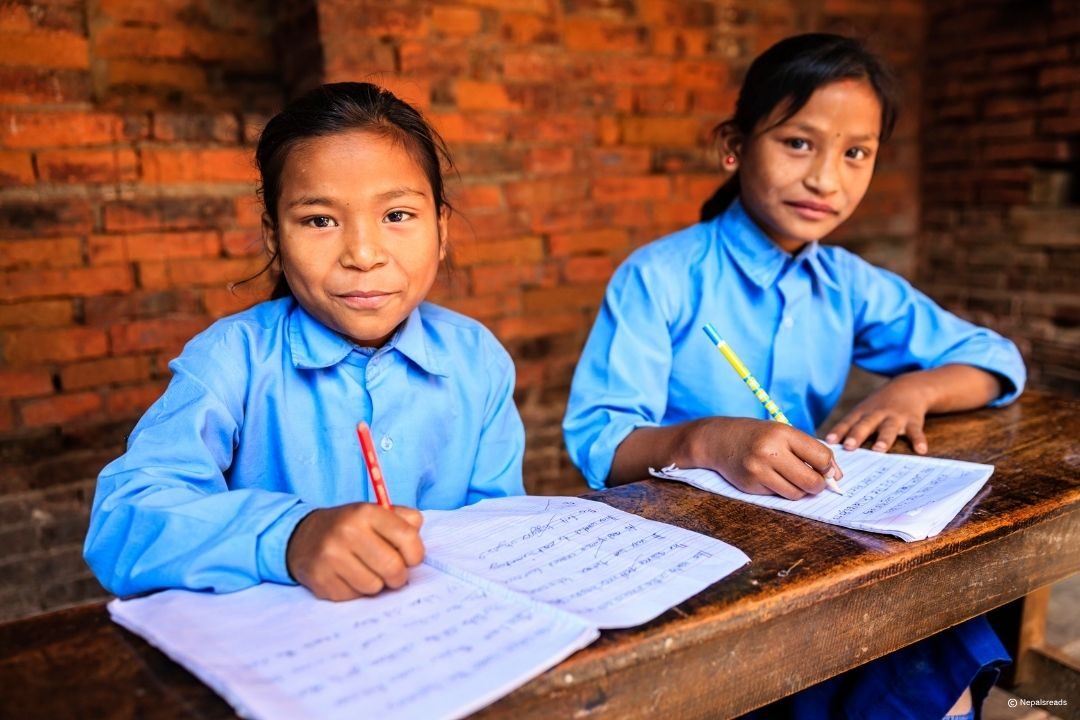
97.7% of children are enrolled in Grades 1 to 8, yet only 9.1% of Grade 3 children read at grade level (National Assessment of Reading and Numeracy, 2024). Over 420,000 children are out of school, only 2 in 5 meet foundational literacy benchmarks, and Nepal has just 248 functional community libraries.
Books remain a privilege
Reading beyond textbooks means buying books. Rural families have the fewest alternatives.
Language shapes belonging
Children engage more deeply when stories carry their mother tongue and lived experience.
Access alone is not enough
A shelf of books does not create readers. Children need story hours, facilitators and family.
The digital divide is growing
Limited devices, connectivity and skills leave marginalised children further behind.
Nepal Reads helps every child in Nepal read with confidence, at school, at home and in the community.
During a family visit to Nepal, Maya Shrestha could not find a single book to borrow and had to buy one instead. That moment became Nepal Reads. Now 12, she leads it as founder, with Sharada Maheswor Smriti Pratisthan (SMSP).
Our mission: Nepal Reads empowers every child in Nepal to read, learn and grow by providing free access to books and educational resources through mobile and online libraries.
Existing community spaces become the home of reading.
Our Approach
Reading as the entry point, not the entire outcome.
When children have engaging books in languages they understand, the freedom to choose, and support from teachers, facilitators and caregivers, they read more and read better. Our framework moves from Reach (I can access and read) to Habit (I choose to read), Reading culture (we value reading together), Lifelong learning (I use what I read) and Leading (I use what I learn to take part and contribute).
The Missing Link
The challenge is not only access to books. It is the absence of a reading culture. Books, families, communities and schools: Nepal Reads builds all four together.
The Ministry of Education and Sports sets policy, curriculum and teacher training. Nepal Reads is aligned with the School Education Sector Plan 2022 to 2032.